Private Cloud: The Ultimate Security and Control Solution for Enterprise Infrastructure
As modern organizations increasingly digitize their operations, balancing technological efficiency with uncompromising security remains a top priority. While public cloud platforms dominate the general market, the private cloud has emerged as the definitive architecture for enterprises that demand total isolation, rigorous compliance, and deep infrastructure customization. By dedicating entire computing environments to a single organization, this model bridges the gap between traditional on-premise hardware control and agile cloud flexibility.
This comprehensive guide explores the structural anatomy, operational models, security benefits, and strategic use cases of private cloud environments in today’s data-sensitive technological landscape.
Understanding Private Cloud Infrastructure
Defining the Private Cloud Model
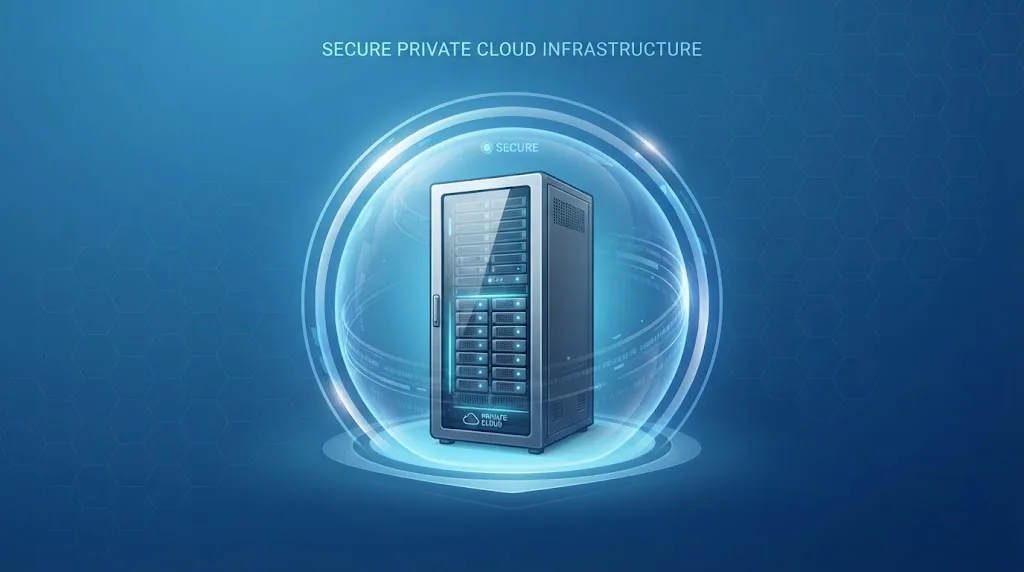
At its technical foundation, a private cloud refers to a dedicated cloud computing environment utilized exclusively by a single business or organization. Unlike multi-tenant public networks where computational resources are shared across thousands of distinct users, a private cloud ensures complete operational isolation. Whether hosted locally within corporate facilities or managed remotely by a specialized third-party vendor, the underlying hardware infrastructure serves only one master.
Private Versus Public: The Core Distinction
While public clouds offer broad, shared ecosystems provided by hyperscalers like AWS or Microsoft Azure, a private configuration eliminates multi-tenant risks. This singular focus grants system architects total autonomy over network topologies, security protocols, and software configurations.
Strategic Advantages of Private Cloud Deployments
Uncompromising Security and Granular Control
Security is the primary driver behind private cloud adoption. Because the hardware is isolated from outside entities, organizations can enforce rigid perimeter defenses, customized firewalls, advanced encryption standards, and strict role-based access control (RBAC) lists without interference.
Tailored Customization for Complex Workflows
Public platforms rely on standardized, pre-configured instance types. In contrast, a private cloud allows enterprises to engineer customized virtual environments, tailored storage tiers, and specialized networking fabrics designed to support complex, high-performance internal applications.
Seamless Regulatory Compliance and Data Privacy
Industries bound by strict regulatory frameworks—such as finance, healthcare, and government defense—must adhere to strict data residency and privacy mandates. Private architectures give administrators explicit control over where physical data resides, simplifying compliance audits for standards like GDPR, HIPAA, and SOC 2.
Taxonomy of Private Cloud Solutions
On-Premises Private Clouds
Hosted entirely within an organization’s physical data center, this approach delivers the absolute highest level of infrastructure control and data sovereignty, though it requires substantial upfront capital expenditure in dedicated technology and on-site maintenance personnel.
Hosted Private Clouds
Maintained within a third-party data center provider’s facility, hosted private solutions dedicate exclusive physical hardware to a single client, striking a balance between dedicated security and reduced facility overhead.
Fully Managed Private Clouds
In a managed deployment, an external partner oversees the entire lifecycle of the private cloud—ranging from routine software patching and hardware upkeep to threat monitoring—freeing internal IT teams to focus on core business growth.
Operational Architecture and Virtualization
Virtualization as the Engine
Virtualization technology powers the modern private cloud. By deploying powerful hypervisors across physical server clusters, organizations can partition hardware assets into dozens of independent virtual machines (VMs), optimizing resource utility while maintaining strict data boundaries.
Conclusion
The private cloud represents the gold standard for enterprises requiring maximum security, regulatory compliance, and architectural control. While it demands a more strategic financial commitment than public alternatives, its ability to safeguard critical digital assets while delivering flexible performance makes it an invaluable foundation for forward-thinking organizations.
Frequently Asked Questions (FAQs)
- What is the primary difference between private and public clouds?
- A private cloud is dedicated exclusively to a single organization for maximum security and control, whereas a public cloud pools shared multi-tenant resources across many users.
- Is a private cloud more expensive than a public alternative?
- Private clouds generally require a higher initial investment due to dedicated hardware requirements, but they offer predictable long-term cost controls for high-volume users.
- Can smaller businesses benefit from a private cloud?
- While traditionally adopted by large enterprises, small businesses with strict data compliance or specialized security needs can leverage managed private cloud options.
- What are the core benefits of utilizing a private cloud?
- Key benefits include enhanced data security, complete infrastructure customization, strict regulatory compliance, and isolated operational performance.
- How do organizations select the right private cloud provider?
- Evaluation criteria should include compliance certifications, security architecture depth, migration support, service-level agreements (SLAs), and management flexibility.