Data Storage Cloud: The Ultimate Guide to Secure, Scalable Digital Vaults
In an era where global data generation expands exponentially every second, efficient data management has become a critical operational challenge. Whether an individual archiving extensive media libraries or a multinational enterprise handling terabytes of mission-critical customer records, traditional local storage mechanisms are increasingly inadequate. Enter the data storage cloud—a transformative technology that provides secure, elastic, and highly accessible digital archives for users across all sectors. This comprehensive guide explores the structural anatomy, operational models, security protocols, and future trajectory of modern cloud storage systems.
Understanding the mechanics of data storage cloud infrastructure is essential for organizations aiming to optimize information flow, minimize hardware overhead, and ensure absolute data integrity.
What is Data Storage Cloud?
Defining Remote Cloud Archives
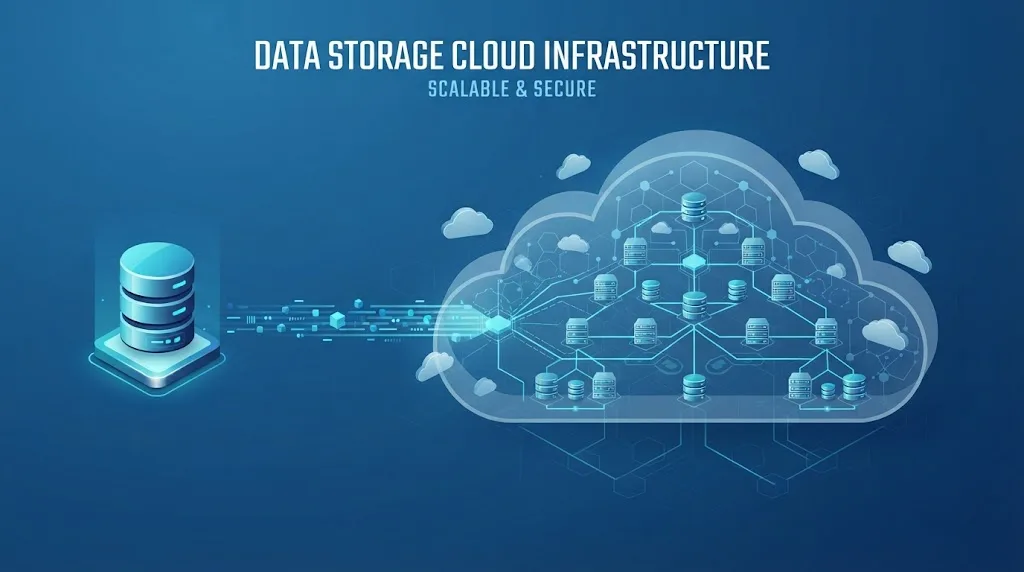
At its foundational level, a data storage cloud comprises online storage architectures that empower users to deposit, manage, and retrieve digital assets remotely via internet networks. Rather than depending on physical hard drives, local network-attached storage (NAS), or on-premise servers, information is housed within distributed off-site data centers administered by specialized third-party cloud providers. This abstraction layer grants users unprecedented flexibility, infinite scalability, and multi-region reliability.
Strategic Advantages of Cloud Storage Ecosystems
Frictionless Scalability and Agility
The primary driver behind cloud storage adoption is its elasticity. As storage volumes expand, organizations can seamlessly upgrade their capacity limits through automated software dashboards, completely bypassing the procurement and installation cycles associated with physical server upgrades.
Cost-Effective Resource Allocation
Operating primarily on a pay-as-you-go financial model, cloud storage eliminates heavy upfront capital investments. Businesses pay solely for the exact gigabytes or terabytes consumed, eradicating the hidden expenses of physical data center maintenance, hardware cooling, and manual maintenance.
Taxonomy of Data Storage Cloud Solutions
Public Cloud-Based Storage Platforms
Public storage services—exemplified by platforms like Google Drive, Dropbox, and Microsoft OneDrive—pool multi-tenant resources to deliver cost-effective, user-friendly file repositories accessible from any global device.
Dedicated Private Cloud Storage
Private storage architectures isolate infrastructure entirely for a single organization, providing absolute privacy and rigorous compliance alignment for sensitive legal, financial, or medical datasets.
Hybrid Storage Models
Hybrid solutions bridge public and private repositories, allowing sensitive workloads to remain isolated on private clusters while high-volume, non-sensitive assets leverage public cloud scalability.
Core Architectural Mechanisms
Distributed Data Redundancy
Cloud storage systems achieve high durability by breaking large files into encrypted data packets and distributing them across multiple geographically separated server nodes. If a primary server encounters a failure, redundant network paths ensure instantaneous file accessibility.
Rigorous Data Encryption
Security protocols protect information throughout its lifecycle. Leading providers enforce robust encryption algorithms (such as AES-256) for data at rest within storage buckets, alongside secure TLS/SSL protocols for data in transit across public networks.
Conclusion
The data storage cloud has fundamentally revolutionized how modern society archives, manages, and retrieves digital information. By offering unmatched scalability, strict security frameworks, and universal accessibility, it replaces outdated physical storage models with a robust, efficient digital foundation. Embracing cloud storage solutions ensures long-term operational resilience and uncompromised data safety in an increasingly digital world.
Frequently Asked Questions (FAQs)
- What is the primary difference between data storage cloud and traditional local storage?
- Cloud storage allows remote online management and retrieval over the internet, whereas traditional storage relies entirely on physical local devices like hard drives or on-premise servers.
- How secure is sensitive data when stored within cloud repositories?
- Highly secure; reputable providers deploy military-grade encryption, strict multi-factor authentication, and automated threat monitoring to prevent unauthorized access.
- Can cloud storage handle extremely large files and enterprise datasets?
- Yes, cloud providers offer virtually limitless scalability, easily accommodating massive workloads ranging from high-definition video libraries to petabyte-scale corporate databases.
- What financial model do cloud storage providers typically use?
- Most platforms operate on a flexible pay-as-you-go subscription model, ensuring users pay exclusively for the storage capacity they actively utilize.
- How do organizations select the right cloud storage provider?
- Key evaluation metrics include security certifications, pricing transparency, data retrieval speeds, customer support availability, and seamless scalability options.