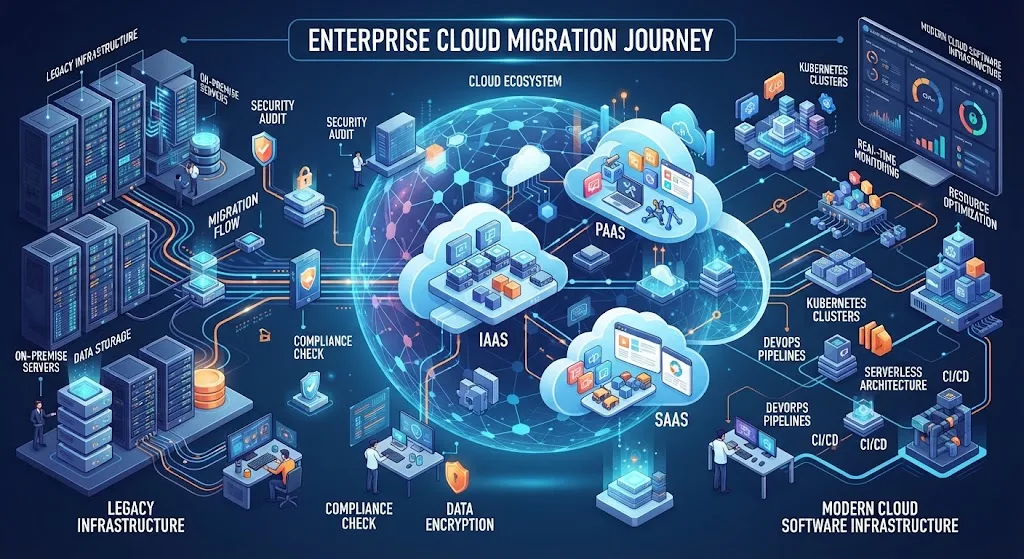
Cloud Migration Strategies: The Ultimate Blueprint for Seamless Enterprise Transition
As modern enterprises increasingly recognize the agility, cost-efficiency, and scalability of distributed infrastructures, transitioning away from legacy on-premises hardware has become a top priority. However, shifting vital enterprise workloads, databases, and complex software applications to remote environments requires meticulous planning, architectural foresight, and execution precision. Implementing robust cloud migration strategies ensures that businesses avoid costly downtime, critical security vulnerabilities, and unexpected financial overruns during their digital transformation journey.
This comprehensive guide explores the core methodologies, architectural phases, potential risks, and best practices that define successful cloud migration in today’s fast-paced technology ecosystem.
Understanding Cloud Migration Strategies
Defining the Migration Roadmap
At its technical core, a cloud migration strategy represents the structured framework and methodological approach an enterprise uses to transfer digital assets from local physical data centers to a public, private, or hybrid cloud environment. Selecting the right strategy depends heavily on application complexity, security mandates, budget constraints, and long-term commercial goals. Without a cohesive roadmap, organizations frequently encounter performance bottlenecks, incompatible software dependencies, and unmanaged cloud sprawl that diminishes initial ROI projections.
The Core R’s of Cloud Migration
Industry standards typically categorize cloud migration approaches into distinct pathways, ranging from simple lift-and-shift rehosting to comprehensive application refactoring. These strategies allow engineering teams to modernize their technology stack gradually without disrupting daily business operations. Evaluating whether an application requires basic rehosting or deep architectural redesign is the single most critical decision in early project phases.
Core Phases of a Successful Migration Execution
Discovery and Application Assessment
Before transferring a single byte of data, organizations must conduct an exhaustive inventory and dependency mapping of all existing software assets. Understanding how applications interact prevents unexpected performance bottlenecks post-migration. Automated discovery tools analyze codebases, database linkages, and network traffic patterns to establish an accurate baseline of operational workloads.
Designing Secure Cloud Architectures
Establishing robust cloud computing architecture prior to data transfer is crucial. Teams must configure virtual private clouds (VPCs), identity and access management (IAM) policies, and encrypted storage tiers to safeguard sensitive enterprise assets from day one. Proper network segmentation ensures that development, staging, and production environments remain strictly isolated and protected against unauthorized lateral movement.
Key Challenges and Mitigation Tactics
Minimizing Operational Downtime
Migrating massive enterprise databases while maintaining continuous service availability requires phased cutover planning and automated data replication methodologies. Utilizing blue-green deployment patterns or rolling updates allows engineering teams to switch traffic to cloud environments seamlessly without impacting end-users.
Controlling Migration Costs
Unplanned data transfer fees and improper resource provisioning can drain corporate capital during migration cycles. Utilizing advanced cloud financial management tools, setting up budget alerts, and rightsizing virtual machine instances ensures that expenditures remain strictly controlled throughout the transition.
Future Trends in Cloud Migration
As cloud ecosystems evolve, migration strategies increasingly incorporate automated artificial intelligence tools to predict workload behavior, optimize containerization parameters, and accelerate legacy code refactoring. These cutting-edge advancements significantly reduce human error and shorten time-to-market for enterprise applications.
Conclusion
Cloud migration strategies are essential for organizations seeking long-term agility and market competitiveness. By thoroughly evaluating application dependencies, adopting the appropriate migration pathways, and partnering with experienced technical experts, enterprises can unlock the full potential of modern cloud ecosystems while ensuring a seamless operational transition.
Frequently Asked Questions (FAQs)
- What is a cloud migration strategy?
- It is a structured plan and methodological framework used by enterprises to transfer applications, data, and workloads from on-premises hardware to cloud environments.
- What are the primary migration approaches available?
- Primary approaches include rehosting (lift and shift), replatforming, refactoring, repurchasing, retaining, and retiring legacy workloads.
- How do enterprises choose the right migration approach?
- Choice depends on application complexity, business goals, regulatory compliance needs, and available internal engineering resources.
- What is the biggest risk during cloud migration?
- Common risks include unexpected operational downtime, security misconfigurations, and budget overruns caused by inadequate initial assessment.
- Why is post-migration optimization important?
- Post-migration optimization ensures that applications fully leverage cloud scalability, eliminating legacy resource waste and maximizing long-term financial ROI.