Cloud Computing Technology: The Digital Engine of Modern Innovation
The rapid acceleration of cloud computing technology has completely redefined how global enterprises and individual users manage, process, and archive critical digital data. By decoupling enterprise applications from on-premises hardware limitations, this paradigm shift has democratized access to enterprise-grade computing. Understanding the foundational layers, service configurations, and security protocols of modern technology is crucial for organizations striving to maintain a competitive advantage in an increasingly connected digital ecosystem.
This comprehensive overview explores the structural core of cloud ecosystems, their operational benefits, security frameworks, and their transformative impact on emerging digital trends.
What is Cloud Computing Technology?
Demystifying Core Cloud Operations
At its core, cloud computing technology involves the on-demand delivery of diverse computing services—including processing servers, data storage, networking modules, and complex software environments—over the internet. Rather than investing heavily in physical hardware data centers, organizations leverage scalable infrastructure supplied by leading providers like Amazon Web Services (AWS), Microsoft Azure, and Google Cloud, adopting an agile pay-as-you-go financial model.
The Underlying Operational Mechanics
Cloud systems operate through massive networks of remote data centers dispersed across strategic global regions. When users execute commands or access applications, computational requests are processed on these centralized server clusters, with results transmitted back instantly over secure network connections. This framework eliminates capital-intensive hardware maintenance.
Essential Components of Cloud Infrastructures
Advanced Cloud Storage Systems
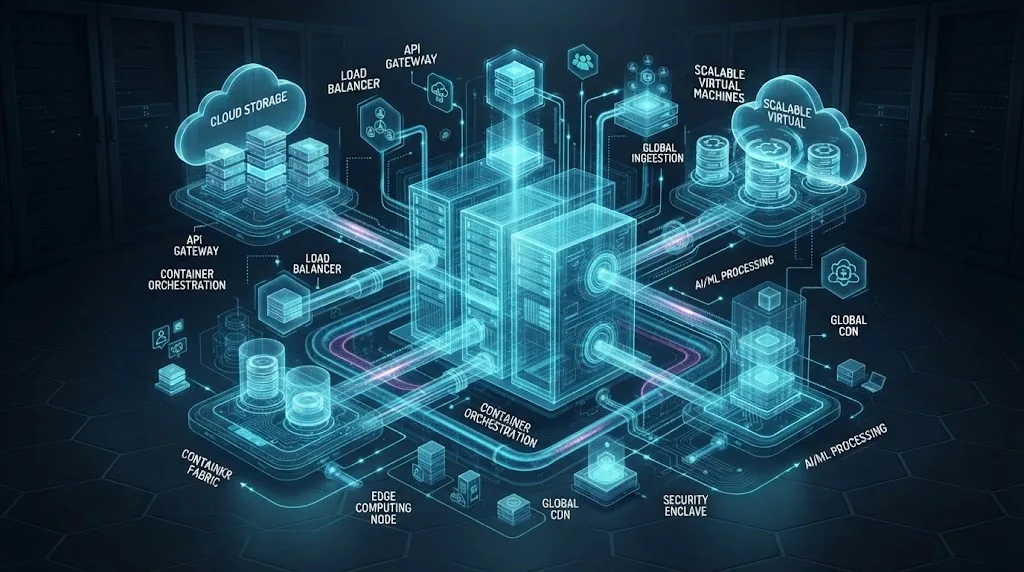
Scalable cloud storage replaces traditional local hard drives and legacy servers. By distributing digital assets across fault-tolerant server nodes, solutions like cloud-backed directories enable secure file retrieval from any location globally.
Virtual Server Environments
Cloud servers replicate physical server execution through software virtualization. These virtual private configurations allow organizations to dynamically provision computing power without hardware constraints.
Decentralized Software Ecosystems
Modern applications run natively on cloud frameworks, allowing multidisciplinary teams to access shared tools, collaborative documents, and enterprise resource planning software simultaneously.
Strategic Advantages of Cloud Infrastructure
Dynamic Scalability and Operational Agility
The primary driver behind cloud adoption is its inherent elasticity. Organizations can instantly scale storage or computational bandwidth up or down with minimal administrative friction, adapting effortlessly to unexpected market shifts.
Financial Efficiency and Cost Optimization
By transitioning from capital expenditure (CapEx) models to operational expenditure (OpEx) frameworks, businesses drastically reduce expenditures related to hardware maintenance, cooling systems, and physical floor space.
Enhanced Team Collaboration
Cloud-hosted environments empower remote workforces by providing real-time synchronization across distributed teams, streamlining project execution and communication workflows.
Architectural Models: Public, Private, and Hybrid
Public Infrastructure Models
Owned and maintained by third-party vendors, public models pool multi-tenant computational resources to deliver high cost-efficiency and rapid deployment.
Dedicated Private Environments
Tailored exclusively for a single organization, private models provide maximum security isolation and custom compliance configurations for sensitive operations.
Hybrid Cloud Synergy
Hybrid setups bridge public and private networks, ensuring sensitive operational data remains secure while non-critical workloads scale dynamically on public clouds.
Security, Privacy, and Compliance Frameworks
Advanced Data Protection and Encryption
To safeguard information against unauthorized interception, top-tier cloud providers implement robust encryption standards for data both in transit and at rest, coupled with strict multi-factor authentication (MFA) protocols.
Navigating Privacy Challenges
Although cloud systems offer high reliability, ensuring compliance with global data privacy frameworks requires meticulous vetting of vendor security policies and disaster recovery redundancies.
Shaping the Future of Digital Solutions
Synergy with Artificial Intelligence
Cloud infrastructure serves as the computational powerhouse for modern artificial intelligence and machine learning algorithms, enabling real-time big data processing and automated predictive analytics.
Internet of Things (IoT) Integration
The explosive growth of interconnected IoT devices relies entirely on cloud databases to store, clean, and analyze high-volume telemetry streams instantaneously.
Conclusion
Cloud computing technology is much more than a temporary digital trend; it forms the bedrock of modern technological progress. By delivering unmatched scalability, cost efficiency, and robust security architecture, it continues to empower businesses worldwide to innovate faster and operate smarter.
Frequently Asked Questions (FAQs)
- What is cloud computing technology?
- It is the on-demand delivery of hosted computing services, including servers, storage, and software applications, over internet networks.
- How do cloud systems function behind the scenes?
- They utilize global networks of remote data centers to process user workloads and store data, eliminating local hardware dependencies.
- What are the primary cloud deployment models?
- The three primary configurations are public, private, and hybrid clouds, each tailored to specific security and scalability requirements.
- How secure are modern cloud computing environments?
- They feature multi-layered defenses, including robust data encryption, identity management, and strict access control protocols.
- What impact does cloud technology have on business growth?
- It streamlines operational expenditures, enhances global team collaboration, and accelerates the adoption of advanced technologies like AI and IoT.